The U.S. Army Corps of Engineers (USACE), Baltimore District, in coordination with the USACE Mission Support Battalion (UMSB), is preparing an Environmental Assessment (EA) to evaluate the potential environmental impacts associated with undertaking the following projects outlined within the Area Development Plan (ADP) for the Humphreys Engineer Center (HEC), which is managed by the USACE Mission Support Battalion:
- Renovate Kingman, Casey, & Cude Buildings
- Construct Conference & Activities Center
- Secondary Egress
- HEC Warehouse – HPTC
- Perimeter Fence
- Sidewalk Improvements
- Implement Pedestrian Spaces
- Demolition of Bunkers
- Auditorium
- Battalion Operations Facility
The EA will also assess the potential impacts of the No Action Alternative, in which USACE does not implement the projects outlined within the ADP.
What is an Area Development Plan?
An Area Development Plan (ADP) is a strategic framework used in urban and regional planning to guide the growth, organization, and use of land in a specific area. Its purpose is to create a comprehensive, long-term plan that integrates land use, infrastructure, environmental sustainability, and community needs to support economic, social, and environmental goals. This ADP aims to balance the demands of future HEC (Humphreys Engineer Center) development with current resource management, ensuring that space is used efficiently while enhancing the quality of life for tenants and promoting sustainable growth.
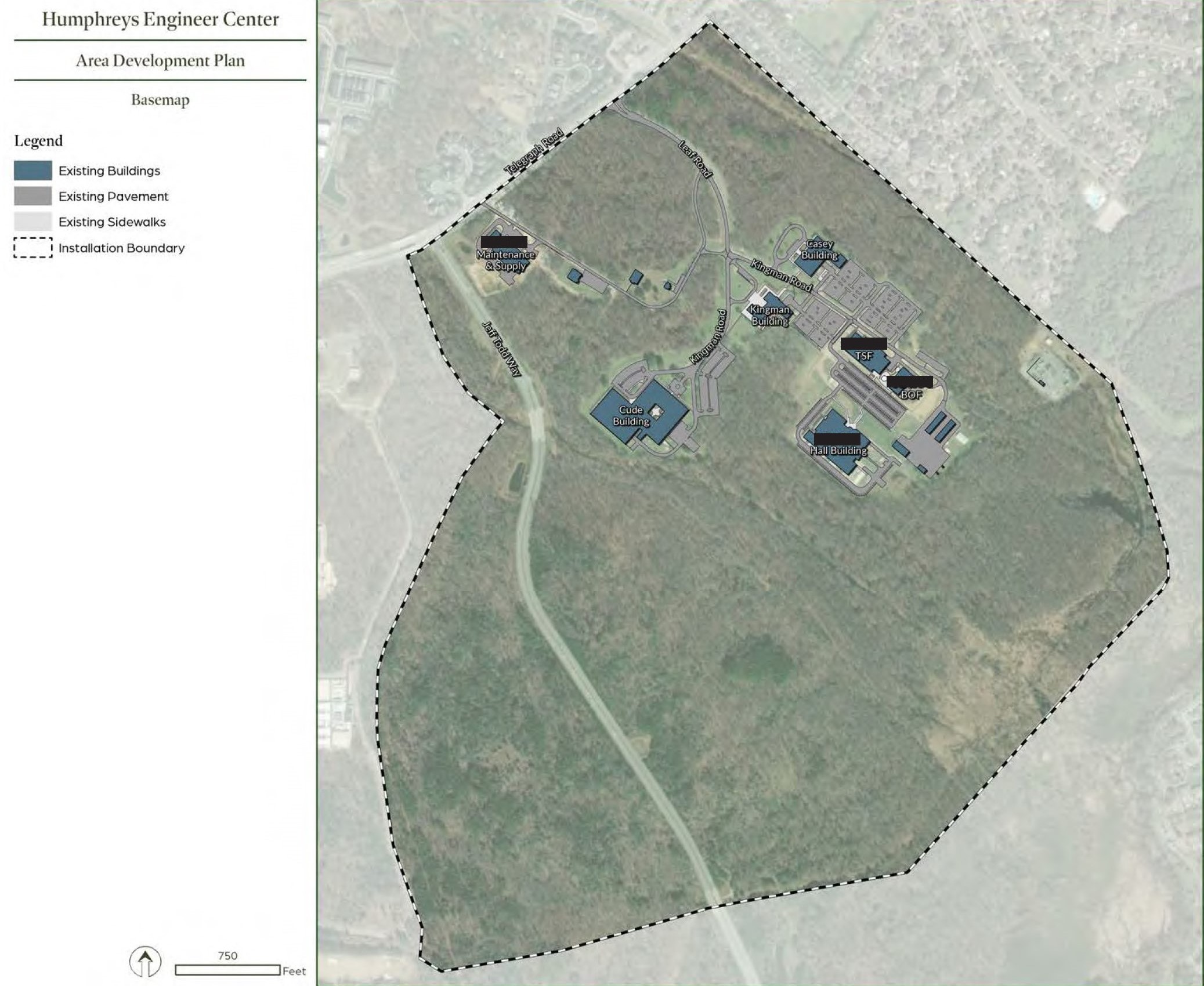
The purpose of the Area Development Execution Plan (ADEP), which will be provided in the Prefinal Submittal after further validation of the Preferred Alternative, is to outline a phased and actionable strategy for implementing the proposed projects within this ADP. As a strategic framework, the ADP guides the growth, organization, and land use at HEC, integrating land use, infrastructure, environmental sustainability, and community needs. By addressing current resource management and anticipating future development, the ADEP ensures efficient space utilization, enhances quality of life for tenants, and supports sustainable growth. This approach balances the installation’s missiondriven priorities with long-term resilience and adaptability.